nature
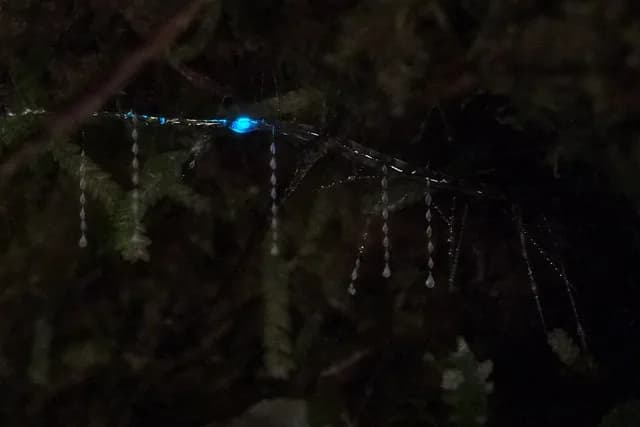
A glowing lure above sticky fishing lines
New Zealand’s glowworms are young flies, rather than worms. They attract prey with light and catch insects in sticky threads hanging from their nests, then pull the threads up to eat: the beautiful glow is also a hunting tool.
Source: New Zealand Department of Conservation: Clifden glowworms · Accessed 2026-10-06
nature
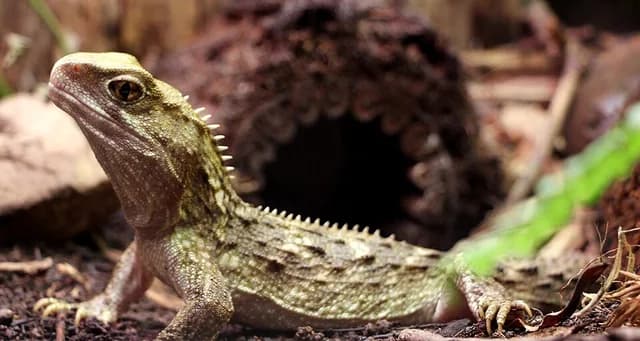
It looks like a lizard, but belongs to another branch
The tuatara is a reptile native to New Zealand with a spiny crest along its back. Although it looks like a lizard, it belongs to a separate ancient group of reptiles whose other members are extinct: appearances can hide a very different family tree.
Source: New Zealand Department of Conservation: Tuatara · Accessed 2026-10-06
geography
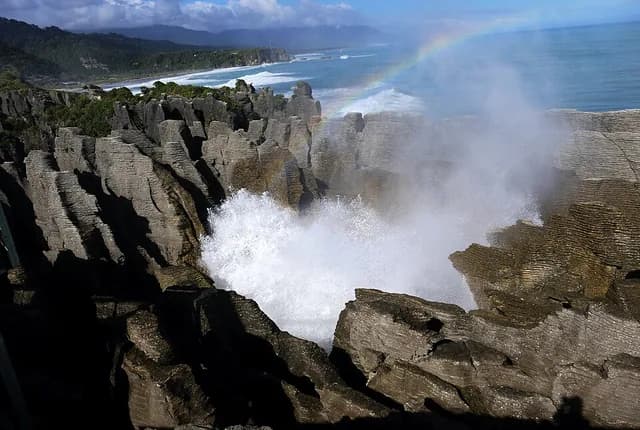
The sea sends spray through holes in the rock
At Punakaiki on New Zealand’s South Island, limestone cliffs look like stacks of pancakes. Waves rush into caves and chambers beneath them; in rough conditions, water and air burst through openings above as blowholes, turning the rocky coast into a natural fountain.
Source: Te Ara: Punakaiki Pancake Rocks · Accessed 2026-10-06